
Board games have been a staple of entertainment for centuries. Whether you’re looking to challenge your strategic thinking, bond with family and friends, or just pass the time, board games offer endless possibilities for fun and connection. In this comprehensive guide, we’ll walk you through everything you need to know about board games, from how to choose the right one to mastering game strategies. Let’s dive into the world of board games!
Why You Should Invest in a Board Game Collection
Rediscovering the charm of Board game
The Social Benefits of Playing Board Games
The Fun of Friendly Competition
The cognitive benefits of Board game
Building strategic thinking and problem-solving skills.
• Games like chess or risk, require deep thinking and long-term strategy. They teach players how to plan ahead, anticipate moves, and manage resources.
• Ticket to Ride require you to make quick decisions and take calculated risks, making every play an exciting challenge.
How to Choose the Right Board Game for You
Choosing the right board game depends on your preferences and the group you’re playing with. There are hundreds of different types of games, each offering unique mechanics and styles of play. Here’s how to find the perfect board game for your needs.

For two players: Quick and Engaging
If you’re playing with just one other person, there are many board games designed specifically for two players. Games like Hive or Jaipur are simple to learn and don’t require hours of playtime, making them perfect for quick, engaging sessions.
• Hive is a strategy game where players move insect-themed tiles to try to trap the opponent’s queen bee.
• Jaipur is a card game where you play as a merchant in India, competing to buy and sell goods in a market.
Both are excellent choices for two players who enjoy strategic thinking and a bit of friendly competition.
For Family Fun: Games for All Ages
If you’re looking for something the whole family can enjoy, games like Scrabble and Uno are timeless classics. These games are simple to understand, quick to play, and involve light competition. For families with older kids or teenagers, Catan is a fantastic option, blending strategy, negotiation, and resource management into one game.
• Scrabble helps enhance vocabulary and word skills while offering a competitive twist.
• Catan offers a dynamic game of building settlements, roads, and cities where resource management is key.
For larger groups, Party games and social fun.
How to Set Up and Play a Board Game: A Step-by-Step Guide
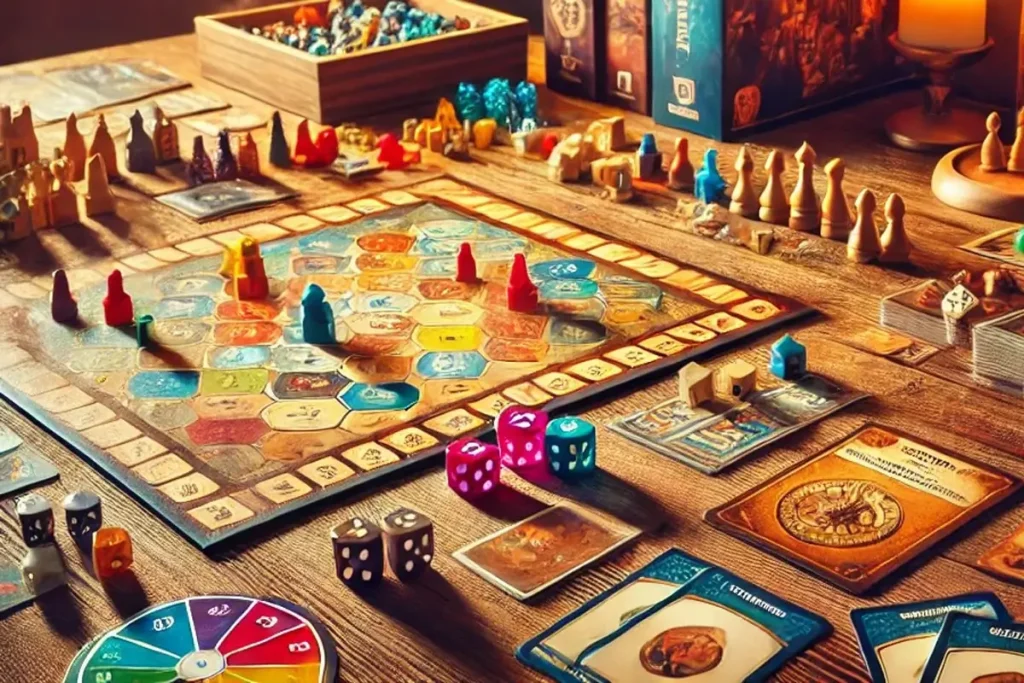
Step 1: Unbox and organize the pieces.
Step 2: Read the Rulebook
Step 3: Arrange the Game Pieces
Step 4: Start playing and enjoying!
Board Game Strategy Tips for Winning
To become a true board game master, you’ll need to sharpen your strategy skills. While every game has different tactics, here are some general strategies to improve your gameplay.

Think Ahead
Learn to adapt
In competitive games, like Monopoly, your strategy might need to change based on the cards you draw or the moves your opponent’s make. Adaptability is a key skill that helps you pivot and stay competitive, no matter the circumstances.
Pay Attention to Other Players
Conclusion
FAQs
Keeping board games organized can be simple with storage solutions like clear plastic bins, shelving units, and labeled zip bags for game pieces. Many people also use board game organizers and custom inserts to keep cards, tokens, and boards neatly arranged inside the game box.
Board games add structure to social gatherings, encouraging interaction, conversation, and teamwork. Board games can serve as a great icebreaker, provide a shared activity, and even spark lighthearted competition, making them an excellent addition to any party or family night.
When selecting a board game for family play, consider the age range, skill level, and interests of each player. Kids and adults alike can enjoy family-friendly games like Scrabble, Uno, Codenames, and Clue, as they appeal to a broad audience.
For beginners, board games that are simple to learn yet engaging are ideal. Games like Ticket to Ride, Catan, Carcassonne, and Pandemic are popular options for newcomers, offering straightforward rules and plenty of replay value.
Yes, board games can be very beneficial for mental health. They help reduce stress, improve mood, and boost cognitive skills. Games like chess and scrabble enhance memory, logic, and vocabulary skills. Azul, a pattern-building game, can be relaxing and engaging. Cooperative games like Pandemic promote teamwork and social connection, which are beneficial for mental well-being.
• Plan: Deliberate step-by-step action to achieve specific objectives. It includes actions, timelines, and resources.
• Ploy: A specific tactic designed to outwit competitors. It can be a short-term move to disrupt competition or capitalize on opportunities.
• Pattern: Consistency in actions or behaviors over time. It defines an organization’s strategic style.
• Position: defines the company’s unique place and value proposition in the competitive landscape.
• Perspective: The organization’s underlying mindset or way of perceiving the world and market. It shapes decision-making and reflects a deeper organizational culture.
Mintzberg’s framework provides a dynamic approach to strategic thinking, enabling a strategy that is more adaptable to different contexts and needs.